

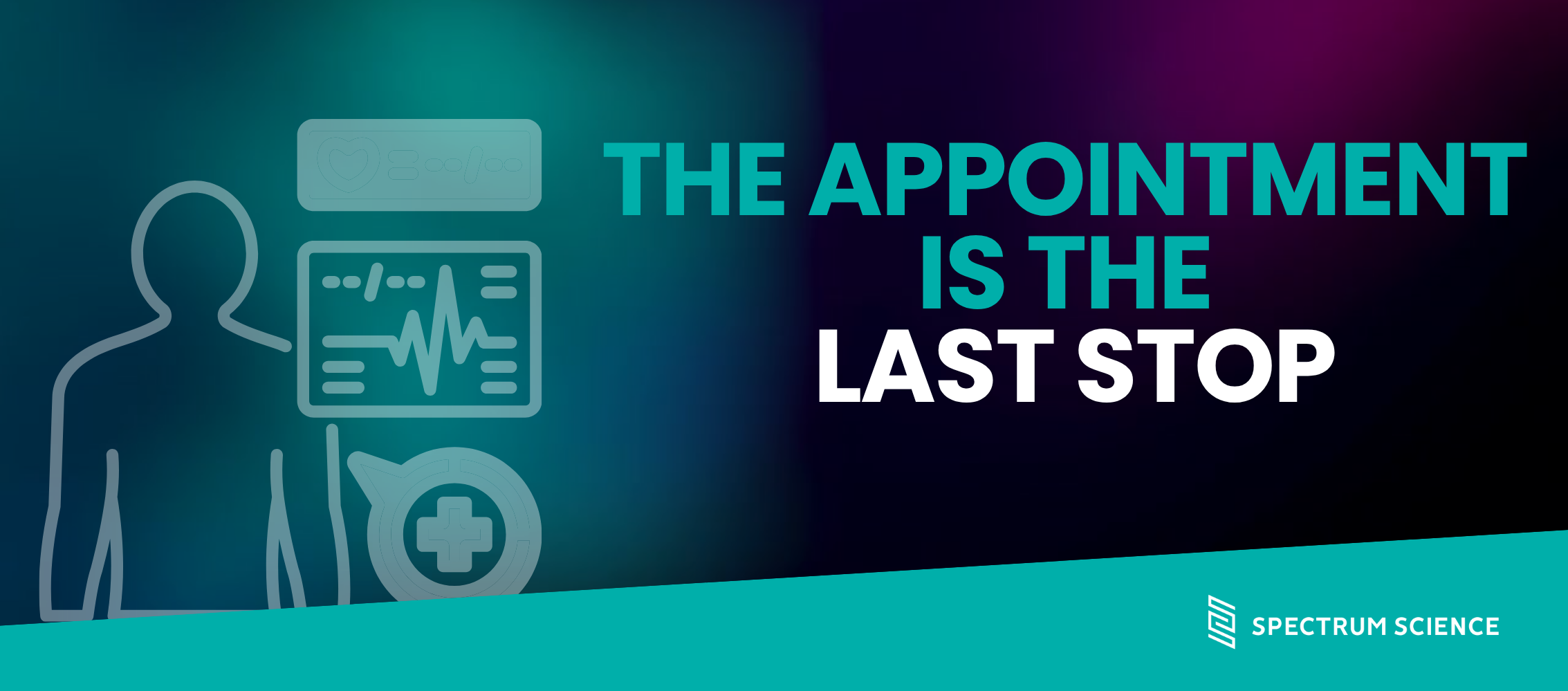
For decades, unbranded disease education followed a familiar model. Raise awareness, guide patients to a trusted destination, and help them take the next step toward diagnosis or treatment. Today, that journey looks very different.
Patients are researching symptoms, exploring AI-generated answers, joining online communities, watching creator content, and engaging with advocacy organizations long before they ever sit down with a healthcare provider. By the time they enter the exam room, many have already formed opinions and built expectations about their care.
This shift is reshaping one of healthcare marketing’s most important responsibilities: helping patients find credible, useful information when they need it most.
In Spectrum Science’s latest PM360 feature, we explore how the traditional approach to disease education is evolving in an increasingly fragmented information landscape.
Five Key Takeaways
- The Patient Journey No Longer Has a Single Starting Point
The idea of a single “front door” to health information is disappearing. Patients encounter information across search engines, AI assistants, social platforms, advocacy organizations, community forums, and healthcare professionals. Each interaction contributes to how they understand their symptoms and whom they trust which is why disease education strategies must account for the entire journey, not just the moments brands directly control.
- More Information Hasn’t Solved the Trust Problem
Healthcare consumers have access to more information than ever before. At the same time, it has become harder to determine what information is credible. As generative AI and digital publishing continue to increase content volume, trust becomes the differentiator.
- Patients Reward Utility, Not Visibility
Being present is no longer enough. Patients are looking for answers to real questions:
- Is this symptom serious?
- What should I ask my doctor?
- Why isn’t my treatment working?
- Is anyone else experiencing this?
Organizations must provide meaningful answers to become trusted resources and not simply add to the noise and risk being ignored.
- Healthcare Organizations Must Think Beyond Campaigns
Patients do not experience healthcare communications through organizational silos. Advertising, public relations, advocacy, medical communications, search, and digital engagement all contribute to a single patient experience. When those touchpoints reinforce one another, credibility grows. When they conflict, trust erodes.
- Success Should Be Measured by Momentum
Traditional metrics such as reach, impressions, and frequency tell us whether information was seen.
More meaningful questions include:
- Did patients learn something new?
- Did they feel more confident?
- Did they schedule an appointment?
- Did they ask better questions?
- Did they stay engaged with their care journey?
True impact comes from helping people move toward informed action.
The Opportunity Ahead
The moments that shape patient trust are no longer confined to physician offices or media placements. They happen continuously across channels, communities, and conversations. That makes credible, patient-centered disease education more important than ever.
This post highlights just a few themes from Spectrum’s latest feature published in PM360. Read the full article in PM360 to explore how healthcare organizations can build trust-driven disease education systems that meet patients where beliefs are forming and decisions are being made.
Perspectives

Advertising
Evolving Human Roles in an AI-Driven Healthcare Landscape
Advertising
Be APOL1 Aware This AMKD Awareness Day

Advertising
How AI Agents Are Revolutionizing Healthcare
Advertising ,
Spectrum Science
Spectrum Is the Agency of the Future and Here’s Why